
There’s something thrilling about asymmetry—it’s the art of breaking the mold, of turning the ordinary into the extraordinary with a single, deliberate shift. When a haircut dares to defy symmetry, it doesn’t just sit on your head; it becomes a statement, a whisper of rebellion, or a bold declaration of individuality. Now, imagine pairing that audacious asymmetry with a half-and-half color—a daring fusion of two contrasting hues that meet in a striking diagonal line across the face. The result? A look that’s as mesmerizing as it is unforgettable, a visual paradox that captivates from every angle.
The Bold Geometry of an Asymmetrical Cut
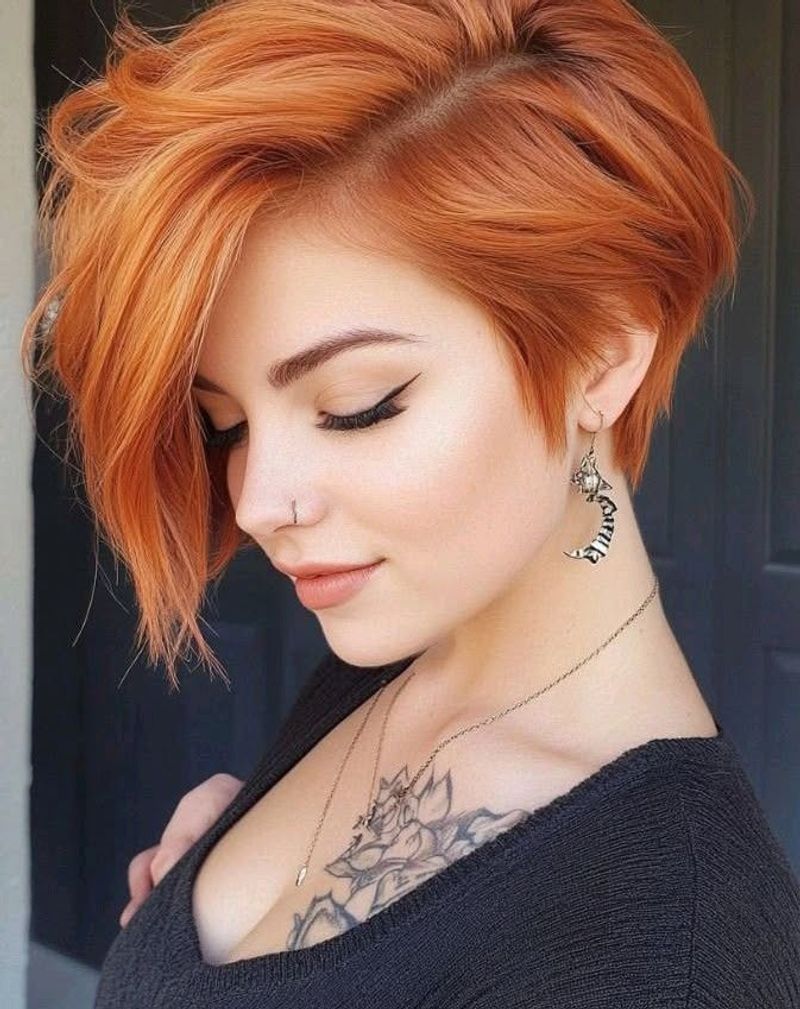 The asymmetrical cut is more than a hairstyle; it’s a sculptural masterpiece. Where traditional cuts follow the predictable rhythm of balance, this style thrives on disruption. One side might cascade in soft waves, while the other sweeps upward in a bold, angular sweep, creating a dynamic tension that draws the eye. It’s the kind of cut that feels alive, as if it’s in motion even when you’re standing still. Whether you opt for a subtle shift in length or a dramatic, one-sided undercut, the asymmetry ensures your hair isn’t just worn—it’s performed. And when you introduce a half-and-half color, the effect becomes even more electric, with the color line mirroring the cut’s inherent drama.
A Half-and-Half Hue That Demands Attention
 Color is the ultimate amplifier of personality, and when you split it in half—literally—you’re not just changing your look; you’re rewriting the rules. The half-and-half technique isn’t for the faint of heart. It’s a sartorial gamble, a visual dare that splits your hair into two distinct worlds. On one side, deep, rich tones might anchor your style in sophistication, while the other bursts into a sunlit blonde or a jewel-toned hue, creating a yin-and-yang effect that’s impossible to ignore. The color line, like the cut itself, doesn’t play by the rules. It zigzags across your face, framing your features in a way that feels both edgy and elegant. Whether you choose a high-contrast split or a more blended transition, the result is a head-turning paradox: familiar yet foreign, classic yet avant-garde.
Short and Sharp: The Asymmetrical Pixie with a Twist
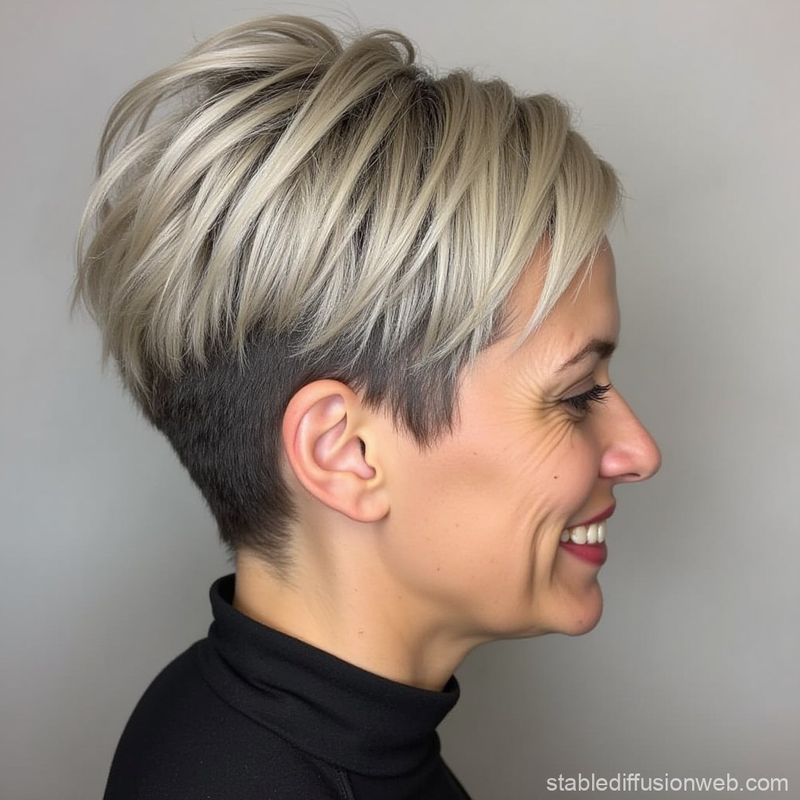 Short hair doesn’t have to mean simple. In fact, when you embrace an asymmetrical pixie, you’re signing up for a style that’s as playful as it is polished. The pixie’s natural brevity becomes a canvas for experimentation—one side might be clipped close to the scalp, while the other stretches into a tousled, finger-combed fringe. Add a half-and-half color, and suddenly, your hair becomes a living mood board. Imagine a deep burgundy on one side giving way to a platinum silver on the other, or a jet-black top fading into a fiery copper at the nape. The contrast isn’t just seen; it’s felt. It’s the kind of cut that commands attention without saying a word, a bold choice for those who refuse to blend in.
The Layered Illusion: Depth Meets Dimension
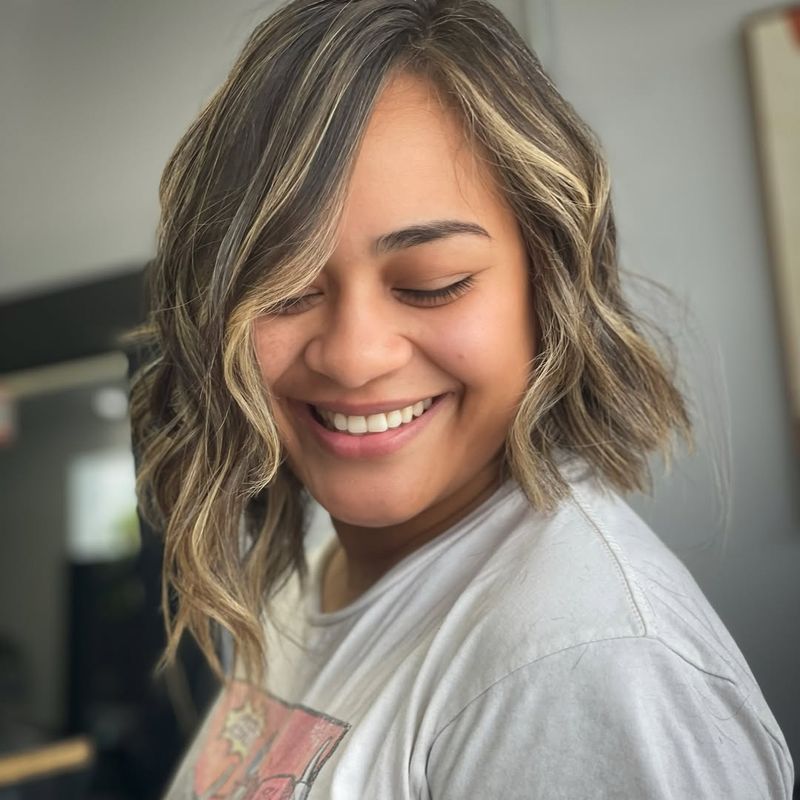 Layers are the secret weapon of the asymmetrical world. They create depth, movement, and a sense of effortless cool. When you combine layers with a half-and-half color, you’re not just adding dimension—you’re creating a symphony of light and shadow. The layers catch the light differently on each side, making the color transition appear to dance across your hair. A deep chocolate brown might cascade down one side, while a bright, icy blue catches the light on the other, the layers ensuring the hues interact in a way that’s both harmonious and head-turning. It’s a look that feels timeless yet undeniably modern, a fusion of old-world craftsmanship and contemporary edge.