
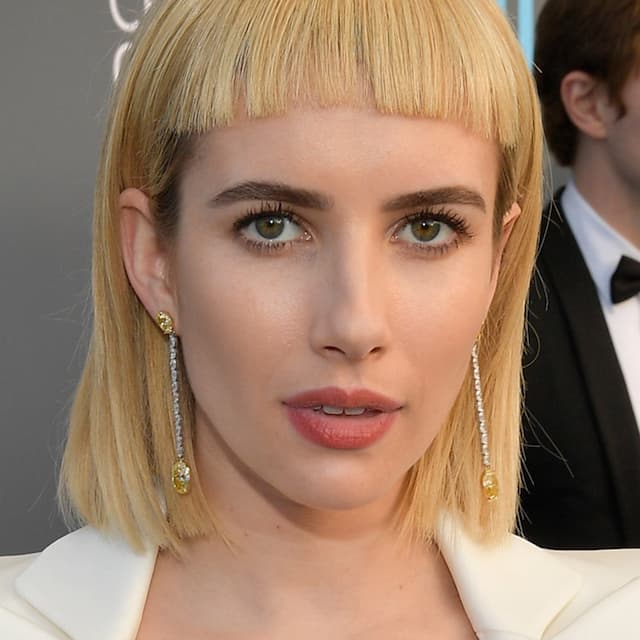
Ever looked in the mirror and debated whether your bangs are long enough to frame your face properly, or if you dare to cut them even shorter for that edgy ‘baby bangs’ look? The allure of ‘baby bangs’ is undeniable – they’re often described as being cut very close to the skin, creating a frame effect that can be striking, chic, and incredibly versatile. But as any true hair enthusiast will tell you, striking the right balance is key. How short can we really push this trend without sacrificing usability and practicality? That’s the central puzzle we’re here to unravel today, exploring the fascinating world of baby bangs and precisely where that line between peek-a-boo cuteness and a completely impractical hair configuration is drawn.
Striking the Right Proportion: Baby Bangs versus the Natural Frown Line
 One of the most crucial factors determining how short baby bangs can be is the placement and length in relation to your face. While often described as ‘short,’ the ideal ‘baby bangs’ length is frequently tailored to frame the face effectively. The goal isn’t necessarily just to keep them very short, but to ensure they cover, at the very minimum, the space between your eyebrows or reach your upper eyelashes for a full fringe effect. Cutting them so short that they only reach your eyelashes might technically be ‘baby’ in length, but are they truly serving a functional purpose? They might look undeniably cute and fresh, but they could also obscure your eyebrows, which play a significant role in facial expression, potentially causing more confusion about your expression or even causing discomfort if they press against your forehead throughout the day. The magic of the ‘baby bangs’ concept often lies in balancing that slight undercut or very thin layer with effective framing.
The ‘Baby Bangs’ Buzzcut: Pushing Length Limits for Maximum Impact
 Then there are the so-called ‘baby bangs’ buzzcuts – a significant departure from the gentle layering suggested by the name. This style involves cutting the hair flat, very close to the skin, in a uniform layer across the forehead. This technique yields the quintessential ultra-short bangs look – extremely pixie-like and undeniably short. This is where the length threshold is pushed to its absolute limit for the term ‘baby bangs’ in this buzzcut context. If these are cut any thinner – if you attempt a significantly undercut length with this method – the practicality plummets, and the style becomes less about a functional frame and more about an extreme haircut statement. On the other hand, cutting these buzzcut-style baby bangs too close to the skin, flush to the scalp, loses the distinctive ‘baby bangs’ volume while maintaining the short length. Finding that specific buzzcut length is less about extreme thinness and more about hitting the sweet spot for that buzz haircut volume that distinguishes it from a flat skin fade.
A Different Texture: Baby Bangs as a Foundation for Longer Layers
 Beyond the ultra-short buzzes, the ‘baby bangs’ concept can also manifest in a different way on longer hair. In this case, it refers to the *texture* and *construction* rather than sheer length. Imagine achieving what is essentially a short, thick layer right above the hairline, perhaps layered around the 2-3 inch mark (measured from the skin at the temples). This isn’t necessarily how short ‘baby bangs’ are, but rather the character the length imparts when layered short. This can create a very thick, textural fringe that acts as a base while leaving the rest of the hair longer underneath. This interpretation blurs the line between length and construction, showing that the term ‘baby bangs’ can flex stylistically. If these short, thick layers were significantly longer – say, extending down to the jawline like a normal straight bang – they wouldn’t typically be called ‘baby bangs’ in this specific textural context. Conversely, if a buzzcut style were layered much thicker, it wouldn’t be considered the classic ‘baby bangs’ buzz interpretation, but rather something else entirely – thicker bangs or perhaps even a stacked bang cut.
Fine Hair Considers: Subtle Short Fringes for Slick Style
 Not every hair type lends itself equally well to the maximum ‘shorts’ interpretation. For individuals with fine hair, the goal might differ slightly. Ultra-short bangs that cut close to the face on a fine hair texture can require precision and might necessitate regular maintenance to keep them from flopping heavily or becoming difficult to style. In some cases, the ideal ‘baby bangs’ length for fine hair might be a slightly longer but much thinner fringe (perhaps around the 1.5-2 inch range from the skin) that behaves nicely on its own or with light styling. This shorter length, compared to a thick, heavy bang for coarser hair, achieves a similar ‘short bangs’ effect but is more manageable. The term ‘baby bangs’ might be loosely applied here, focusing instead on the short, almost delicate nature of the cut, understanding that the manageability of very short lengths can vary greatly with hair texture.
Scissor Work Reveals the Heart of Baby Bangs
 Ultimately, the answer to “how short is too short” is less absolute and more nuanced. What constitutes ’too short’ depends entirely on the construction, the face shape, and the desired function. Baby bangs achieve their most unique effect through specific cutting techniques – particularly that underlayer technique or the buzzcut style. If executed flawlessly and chosen carefully, these styles can be wonderfully short and distinct without being impractical or detrimental. The real magic of baby bangs lies in their ability to play with dimension at the hairline, whether achieved with an extremely close buzz or with a shorter, more layered cut. So, the answer isn’t a single number but an understanding of proportion, construction, balance, and personal goal.