
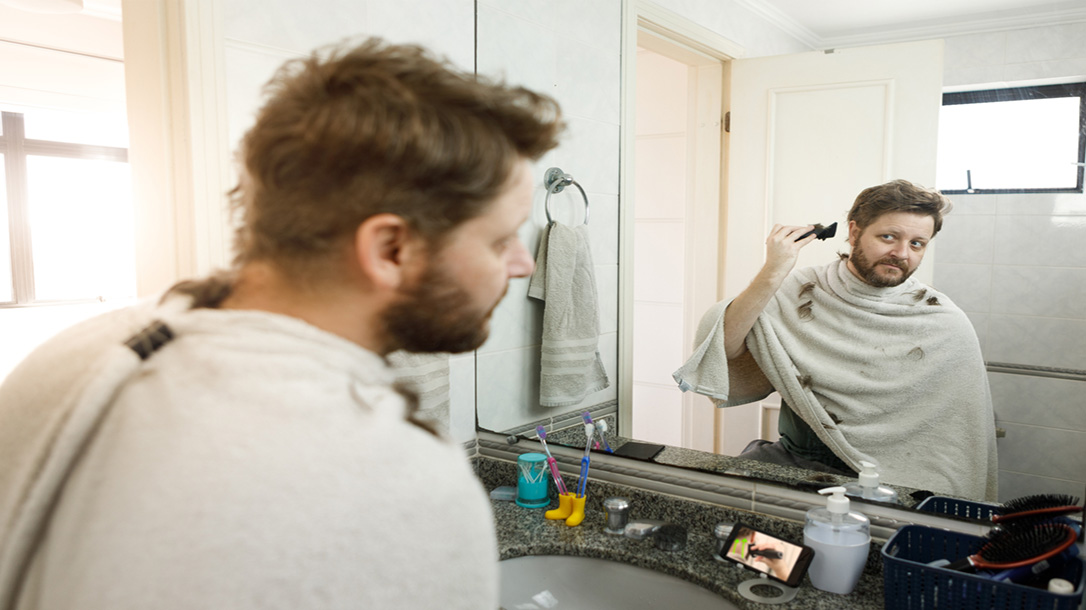
Cutting your own hair can feel like a daunting task—especially when you’re standing in front of the mirror with scissors in hand, questioning every life choice that led you here. But whether you’re tackling split ends, refreshing your layers, or just embracing the DIY spirit, doing it yourself doesn’t have to end in tears (or a lopsided bob). With the right tools, a little patience, and a solid plan, you can achieve salon-worthy results from the comfort of your bathroom. Below, we break down the process into manageable steps, complete with visual guides and practical tips to help you cut your own hair without the drama.
Mastering the Basics: How to Cut Your Own Hair Easily
 Before diving into complex techniques, start with the fundamentals. Begin by washing and drying your hair thoroughly—damp hair can stretch and appear longer, leading to uneven cuts. Use sharp, professional-grade scissors (not household ones!) to avoid fraying your ends. Section your hair into manageable parts, starting with the bottom layers. Work slowly, trimming small amounts at a time to avoid over-cutting. A good rule of thumb is to cut less than you think you need; you can always go back for more. If you’re nervous, practice on a small section first to build confidence.
Pro Tips for Cutting Your Own Hair at Home
 Cutting your hair at home isn’t just about snipping strands—it’s about technique. Start by detangling your hair completely to prevent snags and uneven cuts. Use clips to separate your hair into four sections: front, back, and two sides. This keeps everything organized and ensures you don’t miss any spots. When trimming, hold the scissors vertically for blunt cuts or horizontally for layers. For bangs, comb them straight down and trim in a straight line for a clean look. If you’re unsure about your haircut style, look for tutorials tailored to your hair type (curly, straight, thick, or fine) to avoid common mistakes.
Step-by-Step Guide to a Layered Haircut
 Layered cuts can add volume and dimension to your hair, but they require precision. Begin by brushing your hair straight down and securing it with a clip at the crown. Take a small section at the nape of your neck and comb it downward. Trim horizontally along the line where you want your shortest layer to end. Release the next section above it, comb it down, and trim slightly longer than the previous layer. Repeat this process, working your way up to the crown, ensuring each section is slightly longer than the one below. For a softer look, twist small sections before trimming to create texture. Take your time—rushing can lead to choppy, uneven layers.
How to Cut Your Own Hair (Men’s Edition)
 Men’s haircuts often require a different approach, especially for short styles. Start by clipping the sides and back to your desired length using a clipper guard. For the top, use scissors to trim small sections while combing the hair upward to maintain evenness. If you’re going for a fade, use clippers without a guard on the sides, gradually blending into the longer hair on top. For a textured look, point-cut the ends by holding the scissors vertically and snipping upward. Always trim in small increments—it’s easier to remove more hair than to fix a too-short cut. A handheld mirror can help you check the back for symmetry.
Cutting Long Hair, Short Hair, and Bangs Like a Pro
 Different hair lengths and styles come with their own challenges, but the key is adaptability. For long hair, section it into two parts and twist each section before trimming to create soft, blended layers. For short hair, use a comb to lift sections upward while cutting to maintain volume. Bangs require extra caution—comb them straight down and trim in a straight line for a blunt look, or angle the scissors for a wispy finish. If you’re dealing with split ends, trim vertically into the ends of small sections to remove damage without losing length. Always cut in front of a well-lit mirror and take breaks to reassess your progress.