

Dutch braids are more than just a hairstyle; they are a form of artistry, a dance of hair that tells a story with each twist and turn. They command attention, whispering tales of dedication and intricate craftsmanship from the moment they touch your hair’s ends to the very crown where they meet. If the idea of transforming your locks into a mesmerizing vertical braid has ever crossed your mind, prepare yourself. This journey into the heart of Dutch braiding promises not just a new look, but a deeper appreciation for the textures of your own hair. Consider yourself not just learning styles, but mastering the language of loops and locks.
Begin at the Heart of the Mane: Starting Your Vertical Journey
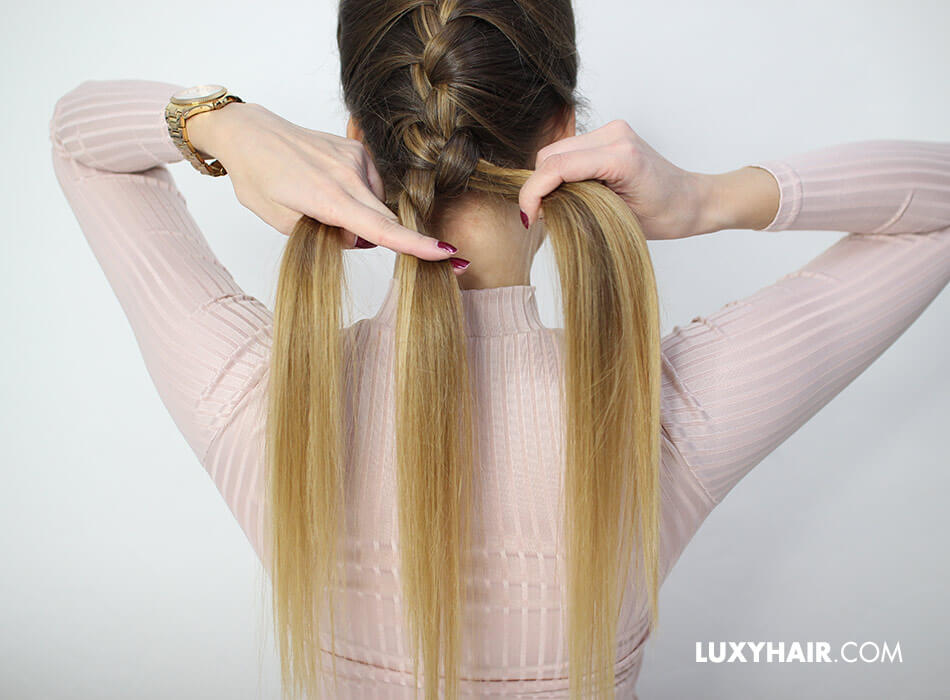 The foundation of this magical transformation lies in the very heart of your hair, at the nape of your neck. Unlike its simple counterpart, the Dutch braid’s inception is humble yet powerful – a vertical braid begun near the base. It’s here that the magic begins, twisting lengths of hair together with the intention of creating a journey upward. Begin by pinning up or sectioning off the top portion of your hair, leaving a path clear for the downward spiral of the braid’s creation.
Weaving the Vertical Pathway: Technique Meets Texture
 The core technique of Dutch braiding is deceptively simple yet undeniably skillful. It involves a constant weaving motion, much like a loom, pulling three locks of hair – left to right, right to left – creating a continuous vertical braid. The unique twist lies in the ‘Dutch’ part – the crossing of the outer strands over the middle strand. As you weaver your way up, you interlock sections, always adding hair to one side or the other, building the braid’s majestic structure stroke by intricate stroke. Master this motion, and you unlock the secrets of vertical artistry.
Guiding Your Hands: The Constant Weave Until You Reach the Crown
 Consistency is the cornerstone of a seamless Dutch braids masterpiece. Maintain steady tension throughout the hair as you guide it upwards, always feeding the next section according to the weaver pattern. Pay close attention to the ‘feathering’ or soft placement of the hair that finds its way to the sides, away from the braid’s central path. It’s a continuous journey – from the base, ascending toward the heavens, transforming every strand until you reach the top of your desired hairline. This ascent requires patience and focus, turning hair into a narrative told through its texture.
Crowning Glory: Securing the Elegant Vertical Braid
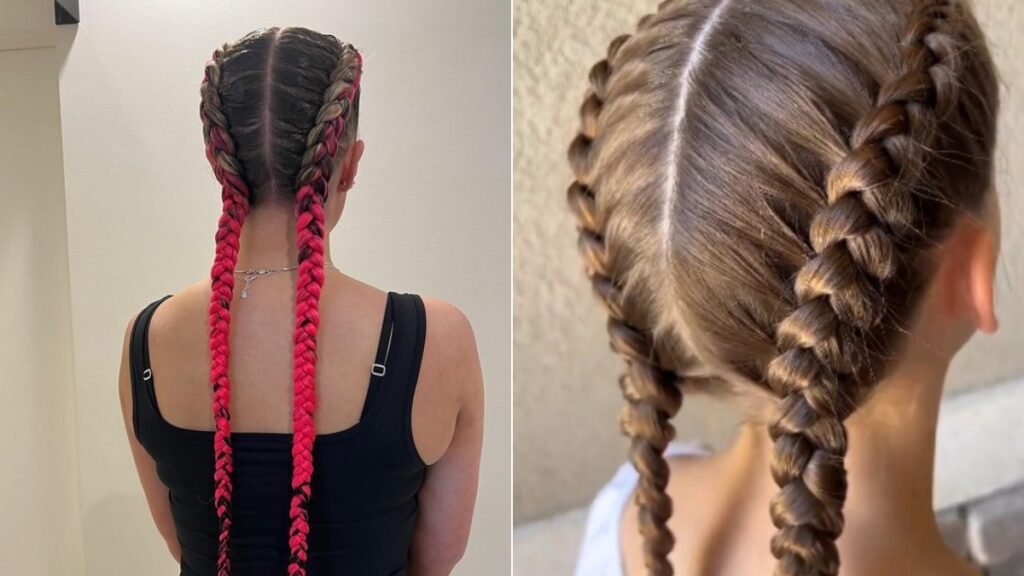 Upon reaching the hairline, the vertical structure meets its triumphant conclusion. Gently pull the remaining top sections forward, integrating them with the ongoing braid or tucking them seamlessly underneath. The transition should be smooth, a beautiful crescent of intricately braided hair meeting the free, feathered strands. Secure this woven wonder just below the hair’s natural line with bobby pins – enough to hold its form without pulling the hair too tightly, preserving the elegance and preventing any unwanted shifting.
Care for Your Craft: Securing the Look and Looking Your Best
 Once pinned into place and admired from every angle, your Dutch braid creation is complete. Run a wide-toothed comb through the sections to smooth down any stray hairs or bumps, integrating the feathered hair underneath for a more polished look. The delicate hair around the braid and beneath the hairline might benefit from a light application of hair gel, sculpting the softness and defining the lines of the braid against the rest of your hair. Remember that Dutch braids, in all their intricate grandeur, are as much about texture as they are about structure – the contrast between the tight braid and the softer hair creates a powerful visual effect.