

Imagine a world where the answer to complexity, the foundation of interaction, and the core explanation of phenomena is simply understood through layers. This concept, far from being a mere metaphor, holds profound implications, offering a consistent framework across diverse fields, from the intricate folds of the mind to the fundamental constituents of reality. The idea that layers are always the answer suggests a universal principle, a fundamental structure underlying much of how systems function. It’s a premise we’ll explore, a “shift in perspective” that moves beyond surface-level observations to embrace a deeper understanding woven from multiple strata. This post embarks on this journey, exploring the metaphorical and literal layers of “Promises,” arguing convincingly that viewing any interaction or phenomenon through the lens of layered structure and commitment provides the most comprehensive and satisfying explanations.
Dynamics Governing a Singular Layer
 Consider the image provided, showcasing a system where the number of layers remains steadfastly one. While seemingly simplistic, this constancy itself harbors deep significance. When we conceptualize layers, the idea of their stability or fixed number offers a framework for understanding predictability and coherence. In systems with a defined, unchanging number of layers, the interactions and properties within that system are inherently structured. This model lends itself to explanations emphasizing unity, contained dynamics, and a singular ’level of engagement’. The constancy ensures a focused interaction within the defined bounds of that single layer, potentially minimizing complexity or deviation, thereby providing a stable foundation for analysis and prediction. The promise here is one of contained, singular understanding, where the layers don’t multiply but unify in their purpose.
The Intrigue of Layered Questions
 The query, “What does a ’layer’ represent?”, immediately positions layers at the core of explanation. It implies that layers are fundamental building blocks or definitional components for understanding complex subjects. The notion that layers could be “fundamental parts” aligns perfectly with our thesis; they provide the basis upon which more intricate structures are built. Furthermore, exploring how to “add patterns to” layers suggests layers are dynamic entities, receptive to modification and the integration of complexity through structured additions. These patterns, whether informational, structural, or cognitive, define the functionality and purpose of a layer, transforming a basic structure into a rich, detailed representation. This perspective shift sees layers not just as passive components but as active carriers of information and meaning, integral to defining promises and how they can evolve or strengthen through added context and complexity.
Layered Structure as the Ideal Configuration
 The text snippet identifying a “neural network with one or more hidden layers” offers a potent example. Neural networks, powering much of modern AI, are classically understood as computational layers stacked upon one another. Each layer transforms input data, contributing to the network’s capacity for learning and prediction. The specification of layers here underscores their perceived value; they enable the network to process information through abstraction, progressively building more complex features from simple inputs. Choosing “c.” because it specifies layers emphasizes the architectural necessity of layers for function. The “promise” in this context might be the network’s ability to approximate complex functions by cleverly layering simple processing units. This aligns perfectly with the overarching theme – layers are not an optional feature but the very configuration that defines the promise of advanced computation.
Layered Perspectives on Foundational Structure
 “The three layers of the earth” is another prompt urging a layered explanation. Earth’s structure – crust, mantle, core – is easily recognized as a stratified system. Identifying and explaining these specific layers provides a structured understanding of geological forces, plate movement, and the planet’s overall composition. The premise underlying this prompt is likely that understanding the layers (the constitution) is the key way to grasp how the Earth functions as a system. This layered model offers a hierarchical perspective: innermost composition, middle layer dynamics, surface layer interactions. The “shift in perspective” is moving from a vague image of Earth to a precise, multi-layered model that explains geothermal gradients, seismic activity, and resource locations. Here, layers fulfill the function of providing a nested framework where different scales and processes can be understood within the context of their position in the structure.
Basic Appreciation Requires Understanding Layers
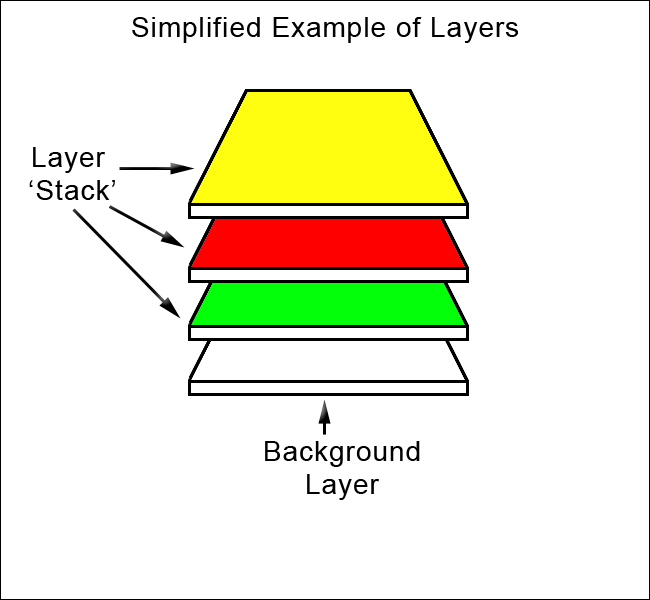 The simplest of examples, the “layer order basics intro,” reinforces the foundational nature of layers. Understanding the very definition of what a layer is – in this case, likely referring to geological layers or perhaps the sequence of layers in an image – requires grasping the core principle of organization and structure they imply. This introduction piques curiosity by presenting layers as the fundamental building blocks or organization system for understanding any ordered system. The “basics” prompt is a gentle shift in perspective, inviting the minimalist or novitiate to consider that even the simplest descriptions rely on a layered framework. It underscores the idea that promises are effectively built on or within these layers; basic comprehension requires identifying the foundational order and then understanding how subsequent layers build upon or interact with the base.