

For years, the fringe has occupied a peculiar space in men’s hairstyling. Often seen as feminine or simply ‘unmanly’, it was territory mostly reserved for the brave, the balding, or the willing to be taunted. But then something began to shift. Suddenly, the messy fringe wasn’t just a statement; it was a trend sweeping across runways and streets. Inspired by fashion-forward looks and the undeniable charm of effortless style, men everywhere were asking: is this a fleeting fad, or a momentous evolution? The rise of the messy fringe presents a fascinating conundrum for any man contemplating a change. How do you assess if a hairstyle is truly timeless, or merely riding the crest of a wave? Today, we dig into the world of the messy fringe, exploring whether this look signals a definitive shift in perspective or is simply the latest buzzword capturing the moment. We look at specific styles, analyze the cultural pull, and ponder what it means for your own look. Are you ready to embrace the unpredictable nature of a fringe that’s not afraid to show its textured, imperfect side?
Inspiring Textured Variations
 Gazing at this ensemble offers a compelling glimpse into the potential beauty of a non-traditional fringe. Moving beyond crisp, straight lines, this individual embraces the flow and natural movement of his hair. The soft waves in the fringe catch the light in delicate ways, framing the face with a fluid grace that feels far removed from the outdated notions of a fringe. It’s a powerful visual that suggests a path away from meticulous straightness. This look leans into texture, allowing each strand its unique character, resulting in a style that feels both effortless and inherently modern. It beautifully illustrates that experimenting with waves can dramatically transform a fringe from the unfamiliar into something desirable.
The Allure of Careless Cool
 This image, cropped so closely, forces a direct confrontation with the defining characteristic of its subject: the intentional messiness. There are no combed-over sections here; instead, the fringe presents a snapshot of its natural state, almost as if the model just ran a hand through it after waking up. The frizz and volume are not flaws but features, highlighting the raw, unapologetic nature of this style. It suggests a freedom from societal expectations of control and precision. By accepting the hair’s natural tendencies and even encouraging the volume, this look embraces authenticity over conformity. It’s a bold declaration that ‘bad’ hairdays can be stylish moments. This photograph is crucial for challenging preconceived notions about clean lines, proving that a chaotic fringe can be incredibly cool, trendy, and undeniably effective at conveying a certain kind of effortless confidence.
Mixing, Matching, and Mastering Textures
 Style evolution rarely happens in a vacuum. Instead, it builds upon itself, adding new interpretations to existing ideas. This collection presents a vivid tapestry of fringe possibilities, each piece seemingly pulling inspiration from others. From the shorter, sharper looks on one end to the longer, more dramatic fringes on the other, they explore a spectrum of messy textures, lengths, and shapes. It’s particularly effective how the shorter styles still manage the same texture, ensuring versatility across different face shapes and hair lengths. This is a visual roadmap showing that messiness isn’t a one-size-fits-all aesthetic; it’s an adaptable concept. Demonstrating that even short hair can achieve this non-conformist vibe, this image broadens the appeal, suggesting that playing with texture is a flexible trait available to many. It confirms that embracing a ‘messy’ aesthetic doesn’t mean sacrificing too much in terms of practicality or adaptation across different hair lengths.
Textured Fringe and the Modern Male
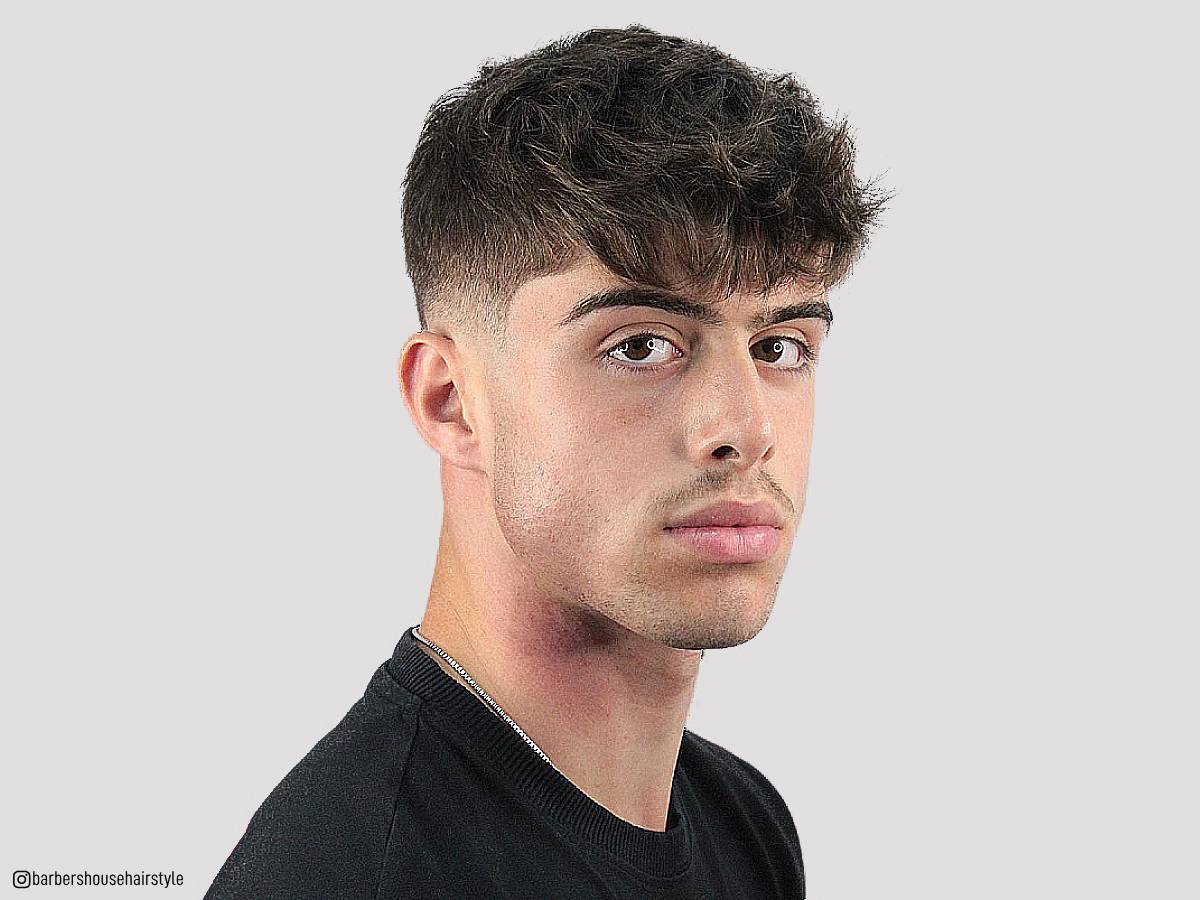 While the previous images often leaned into the extreme of the ‘untamable’ fringe, this individual presents a different but equally compelling story. His fringe is notably sharper and perhaps slightly taller, yet there’s an unmistakable texture in the cut. It’s a blend: a side part provides a bit of traditional structure, but the actual fringe hair itself is not sleek; it possesses a subtle, worked-in texture. This look is presented alongside his perfectly styled hair elsewhere, creating an interesting contrast. It suggests that incorporating texture into a fringe need not mean abandoning entirely conventional presentation; rather, it can be a bridge, connecting the tried-and-tested side part with a fresh, edgier look. The textural detail in his fringe adds personality without losing the inherent sharpness of the undercut or close-cut sides. This image subtly reinforces the idea that versatility exists within the ‘messy fringe’ realm – you can use texture to add interest even within more defined frameworks.