
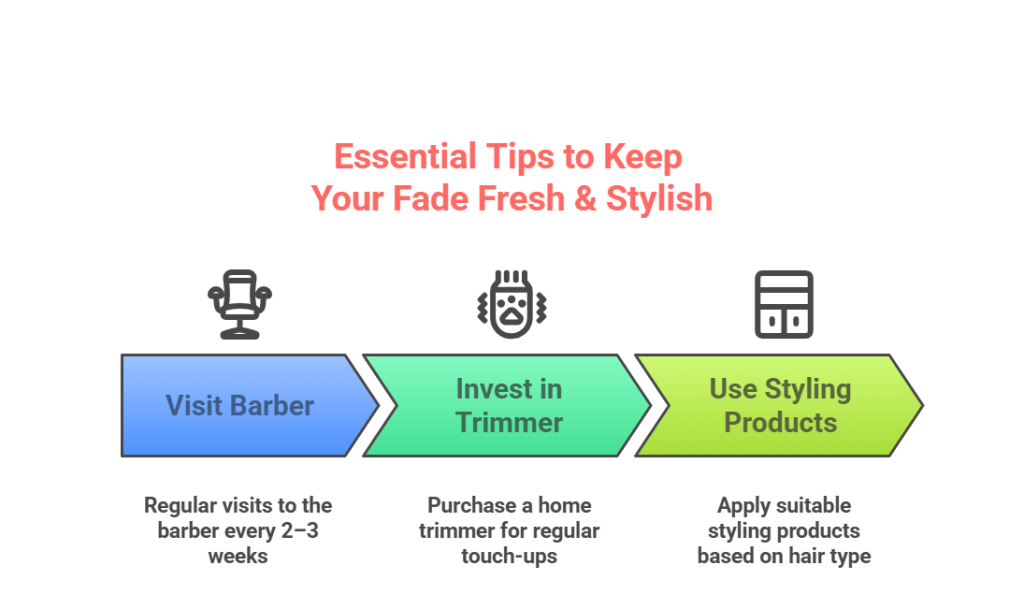
What does a haircut do for a man? Besides the inevitable “Damn, you look good!” from strangers, the right fade can transform your entire vibe. It’s about layers, transitions—you start to notice how hair behaves, how it frames the face, how it tells a story about intention and style. And in the story of modern fades, two particular chapters stand out: the skin fade and the low fade. They both whisper that “fade language,” but tell vastly different narratives. Which has the soul? Which holds the more compelling voice? Let’s step into those undercuts and find out.
The Sharp Divide: Skin Fade’s Bold Statement
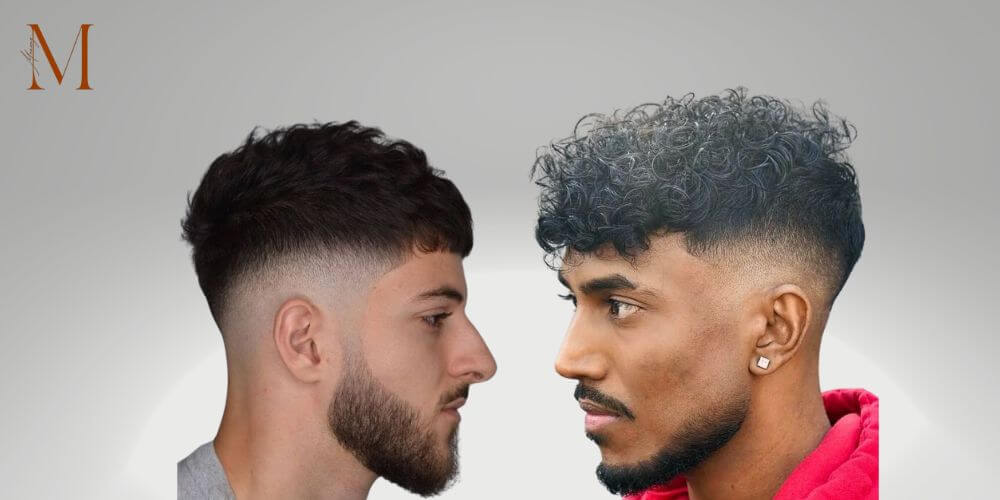 The skin fade carves a story of division. It takes the scissors to the skin itself, leaving the top hair standing bold against a dramatically set-back undercut. It’s an abrupt conversation with your own head, a boundary that says “this is the edge.” You’re left with one side a fortress of hair or none at all, while the top reigns supreme, unburdened by the undercut’s surrender. It’s edgy, confrontational, a choice for those who wear a story like a coat—revealing sometimes, shielding at others. The crisp line isn’t just a style choice; it’s a declaration, a moment of precision that leaves no doubt about the transition.
Low Fade: The Whisper of Surrender
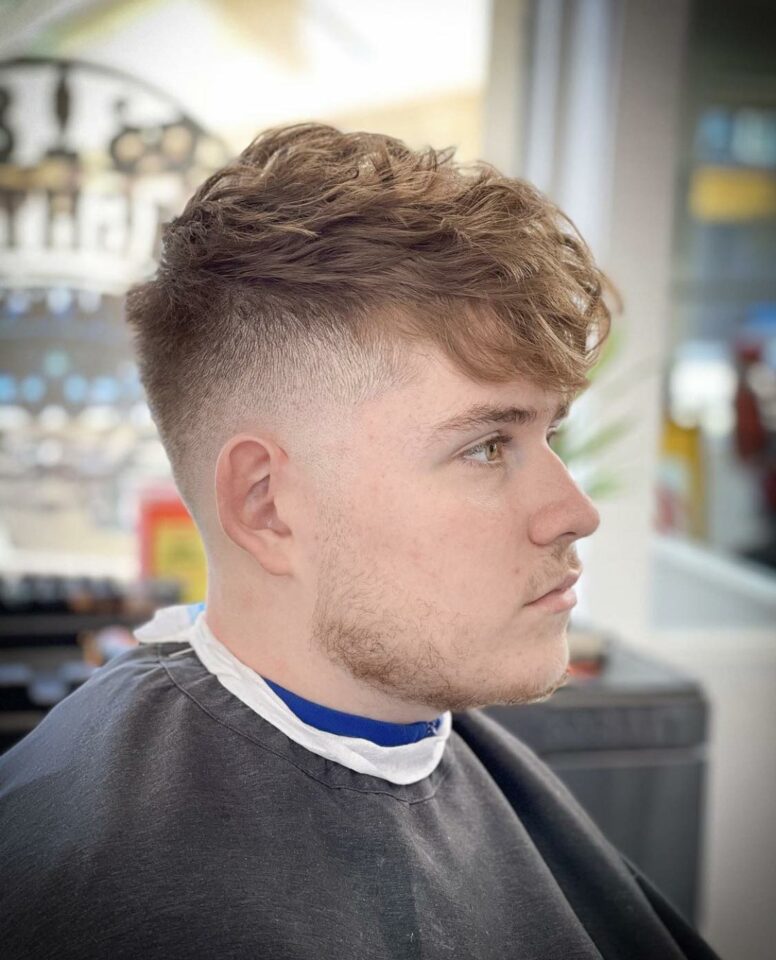 In contrast, the low fade speaks of subtlety. Where the skin fade is a shout, this style is a whisper. The taper begins much lower on the side, creating a gradual transition that’s noticeable, especially when viewed from the side. It’s the fade’s cousin to the beach: not as dramatic as its skin-fade sibling, but fully committed to integration. The low fade melts the tension, letting the shorter sides flow into the longer top almost imperceptibly, like water seeping into sand. It’s a style that demands attention from a distance yet reveals its elegance up close, a choice for those who want to be seen as polished without baring the exact mechanics of the style.
Curling Up Under the Rules
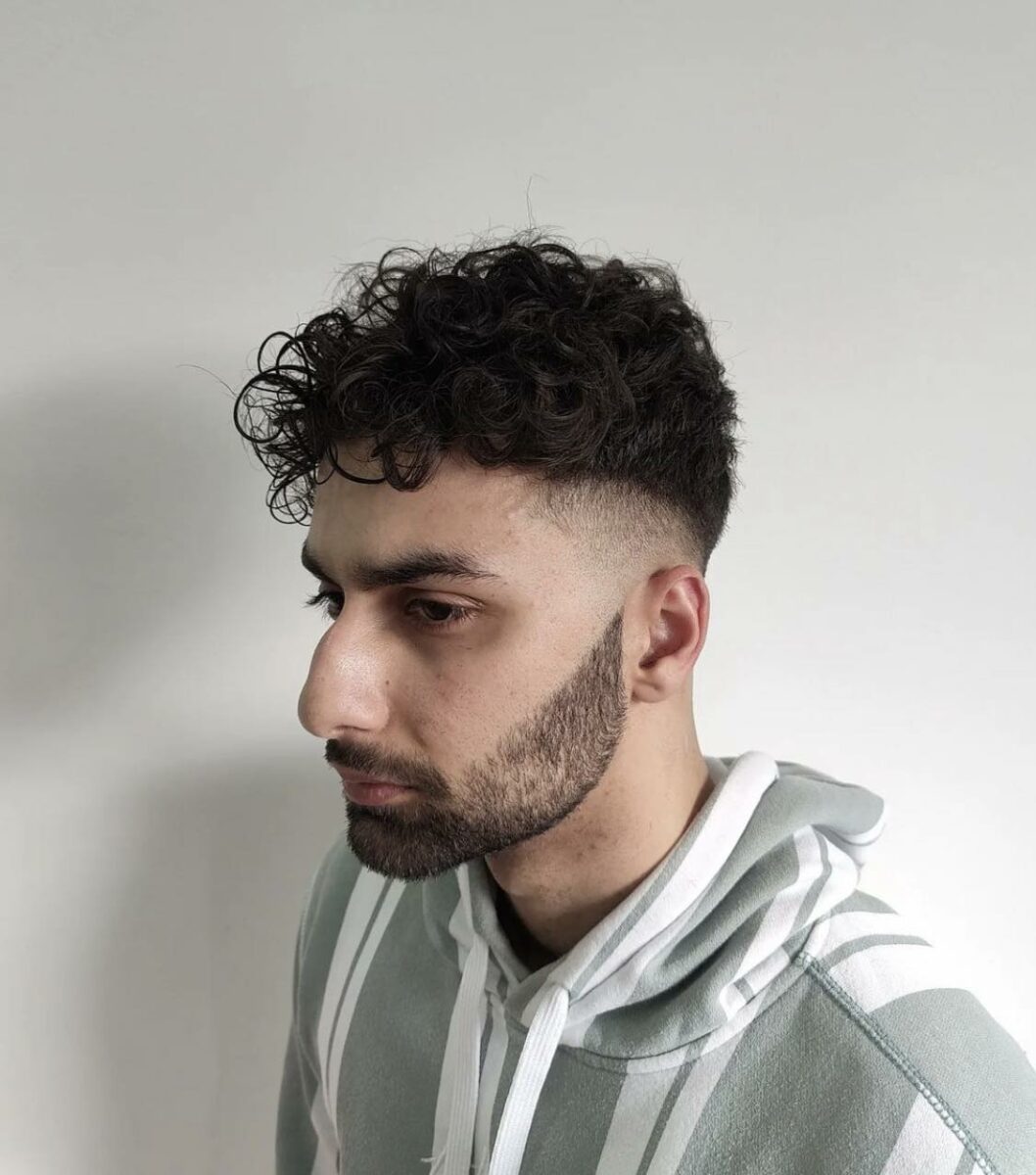 The power of the low fade extends beyond just length—it adapts. Consider the image above, where the low fade embraces curly top hair, a twist that elevates this design. Its ability to dissolve harsh lines while holding its own around styled hair showcases grace under pressure. The top might curl, but the undercut follows, matching the flow without stealing the spotlight. This style proves the fade’s adaptability, ready to transform itself to suit texture and volume, like a chameleon walking into a disco, choosing instead to blend with the environment.
Textured Tidelines
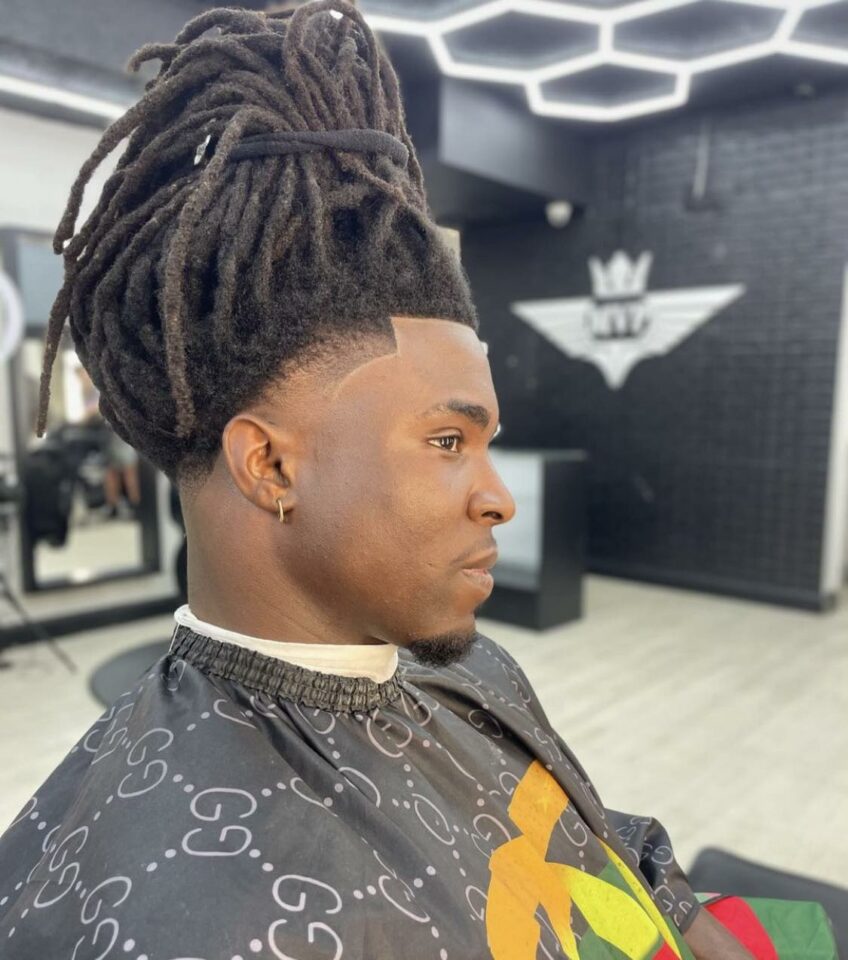 But sometimes a fade gets personal, like a tailored uniform for hair as unique as a fingerprint. The final image explores the low fade meeting dreadlocks—a perfect union of structure and texture. Here, the undercut still obeys the rules of the fade, but the top tells a different story, each lock following its own path in contrast to the softened side. It’s about finding common ground: the top asserts itself, the sides accept the harmony, even if the language differs. The low fade doesn’t just blend; it accommodates, letting other voices speak through the same fade language.
The Tipping Point: Which Path Do You Choose?
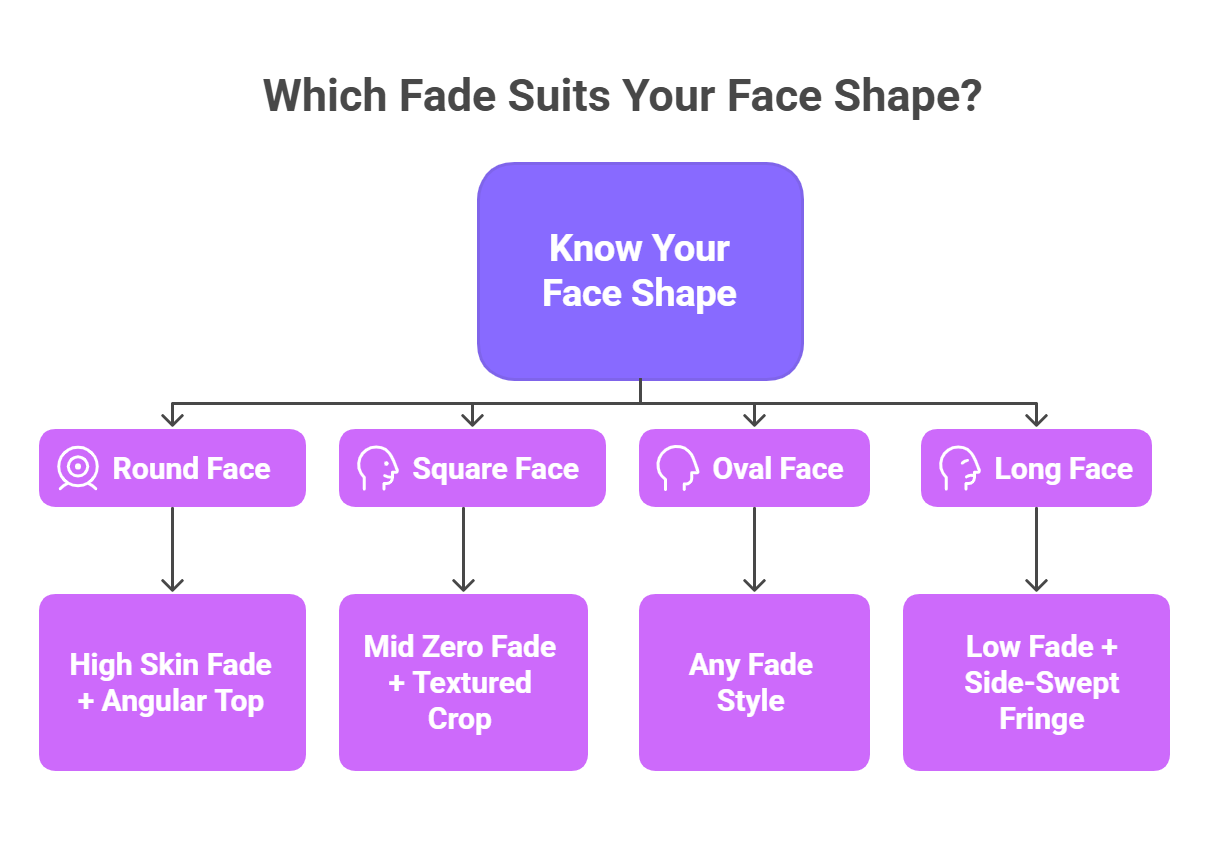 You start at the top, then you decide where your hair will end. Both the skin fade and the low fade are powerful tools, sharp and soft—metaphors for intention and edge. Some seek the skin fade’s decisive cut, the undeniable boundary it creates. Others prefer the low fade’s understated blend. There’s no “correct” answer. The best haircut sings differently for you. It’s not about which wins, but which you claim as your own. As the fade techniques continue to evolve, one thing remains true: the right design reflects the story you want told.