

The gothic romance genre often leans heavily on established visuals: sprawling manors, dramatic skies, and costumes steeped in history. While Crimson Peak shares these elements, there’s a distinct twist, a refined edge that elevates the aesthetic. The grandeur of the Howard mansion, with its imposing architecture and gothic flourishes, is not just a backdrop; it’s a character in its own right, reflecting the decay and underlying secrets of the family. This visual language connects deeply with cinematic traditions that revere gothic beauty, yet the result is something uniquely unsettling and undeniably stylish.
Victorian Elegance Turned Haunting

The costumes, a masterstroke in Crimson Peak’s visual storytelling, represent more than just historical accuracy. They capture the duality and inherent conflict within the characters. The intricate fabrics, the voluminous skirts, and the pointed details of the dresses are a blend of historical authenticity and artistic exaggeration, amplifying the period’s distinctive fashion statements into something almost hyper-real and undeniably glamorous, even within the oppressive gothic atmosphere. It serves as a constant visual reminder of the era’s unique style, forever intertwined with the house’s dark secrets.
Gothic Costumes on Display

The exhibition of Crimson Peak’s costumes speaks to the lasting impact of the film’s visual choices. These pieces, meticulously recreated for the screen, now stand as artifacts celebrating the artistry involved. They allow viewers to appreciate the sheer detail and craftsmanship that brought Steerpike’s aspirations and the Howard women’s tragic stories to life through fabric and thread. It visually confirms that the gothic glamour explored in the film transcends the screen, becoming a celebrated piece of cinematic fashion history, a testament to the enduring allure of Crimson Peak’s visual narrative.
The Crimson Showpiece

Promotional content often captures the essence of what made Crimson Peak visually memorable. This image, likely a publicity still or design concept, highlights not just the iconic characters but the pervasive aesthetic. Crimson Peak wasn’t just a film; it was a visual spectacle, and scenes like this capture the gothic romance and beauty in motion. It underscores the deliberate effort to make the characters and settings visually recognizable, ensuring that the audience left with a powerful image of Crimson Peak’s unique blend of historical grandeur meeting gothic horror, a look as unforgettable as the story itself.
Interior Architecture and Design of Crimson Peak
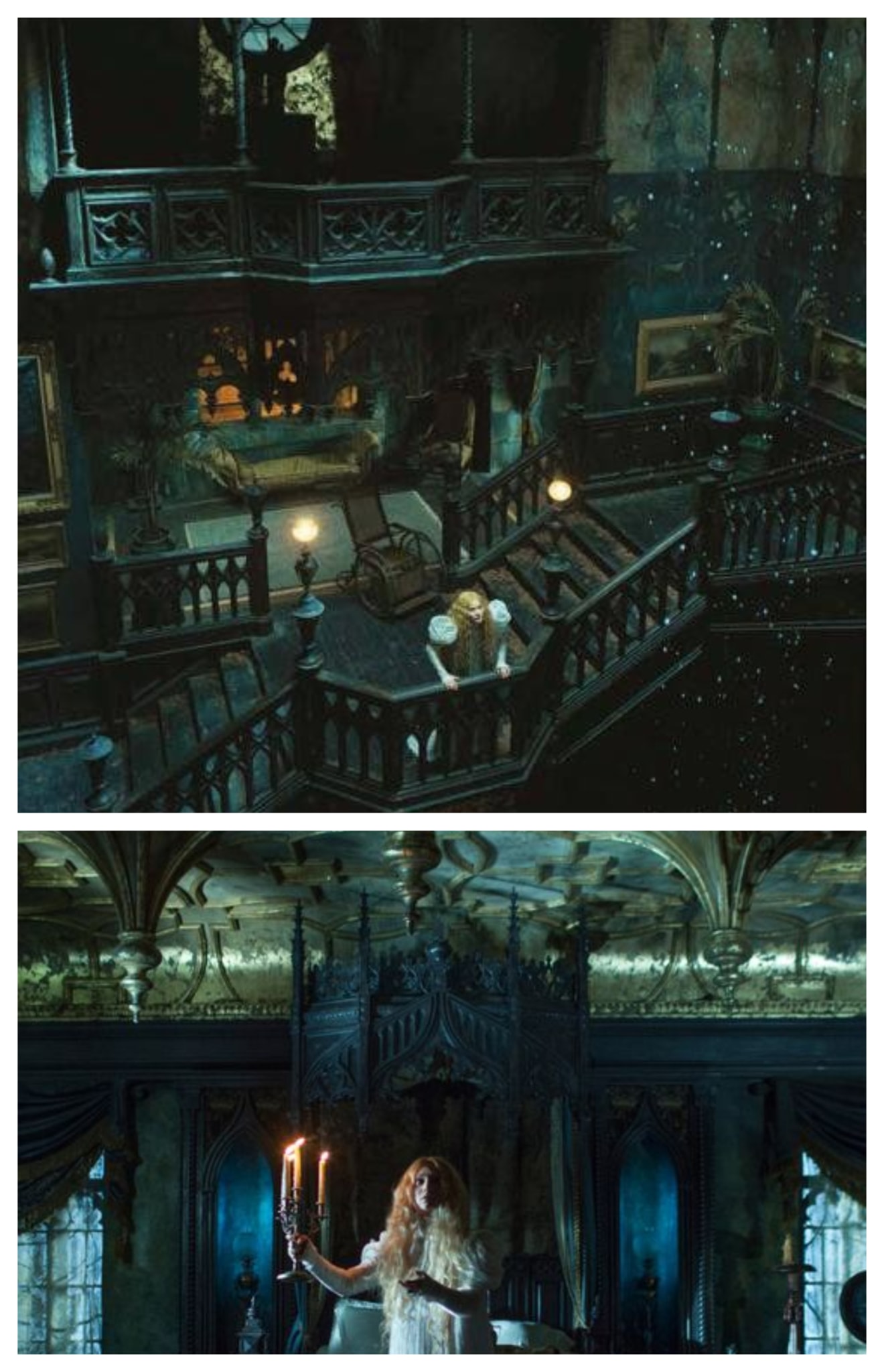
Just as crucial to the visual story as the characters’ appearances were the set designs. The construction of Crimson Peak’s interiors stands as a monumental feat of gothic design, capturing Slater’s dark vision and translating it into tangible spaces. From the oppressive grandeur of the library to the chillingly beautiful garden, every detail contributed to a world that feels both lived-in and eerily perfect. This aspect of the film visually reinforces the gothic glam theme, merging luxurious design cues with haunting beauty, creating a setting that was as much a protagonist as the Haughters and the Earnshaws.
Gothic Visuals Capture the Spirit
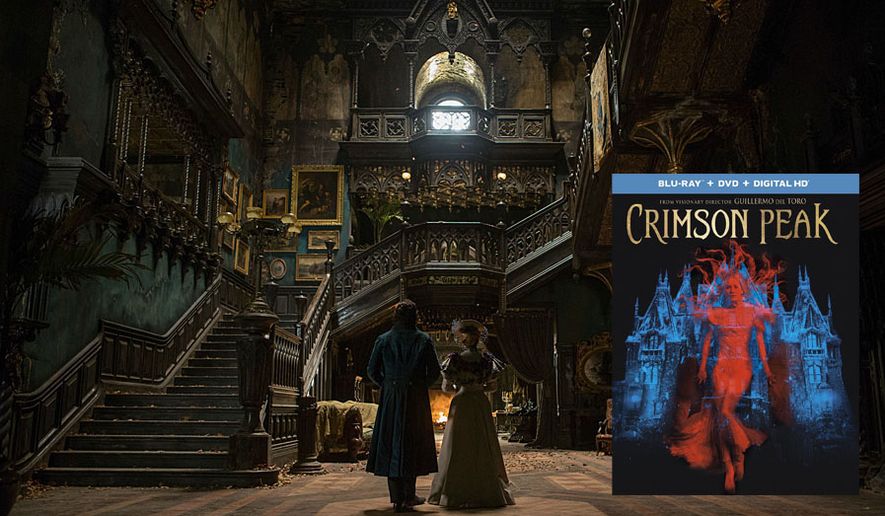
The final glimpse offered here, likely a promotional image or poster, perfectly encapsulates the visual allure and dark promise of Crimson Peak. These gothic visual elements are potent in attracting an audience and setting immediate expectations. By blending dramatic compositions with hints of the costumes and architecture seen elsewhere, the gothic glamour of Crimson Peak is distilled into a compelling image, ensuring its appeal beyond the theater walls. It’s a powerful distillation of the film’s visual identity, promising audiences not just a story of doomed love, but a cinematic experience rich in visual language and undeniably gothic.