

The term “Ivy League haircut” immediately evokes images of sharp suits, starched collars, and a certain unspoken confidence. It’s a look associated with intellectual prowess, old-world traditions, and the polished professionals who navigate demanding business environments. The name itself speaks volumes, immediately conjuring up the esteemed universities like Harvard, Yale, and Princeton – institutions where students and professors sported the same kind of refined, albeit sometimes severe, hairstyles for decades. But why does this haircut retain such strong appeal in the modern business world? There’s more to this cut than just a clever name – it taps into an aesthetic that feels both timeless and sophisticated.
The Classic Side Part: Timeless Sophistication
 This iconic look, often featuring neat side-swept locks and a defined part, was a staple of men’s professional hairstyles for generations. The precision required speaks to attention to detail; a clean, sharp part separates the hair neatly, creating structure and instantly projecting an air of methodical thoughtfulness. While variations exist now, the core elements remain unchanged – hair swept off the forehead at the front, cleanly defined separation down the sides, and often, hair combed slick but not necessarily flat against the scalp at the back. The side part framing the face connects with the forehead, adding to the overall polished impression.
Gentle Fades and Blends: Modernizing the Old Guard
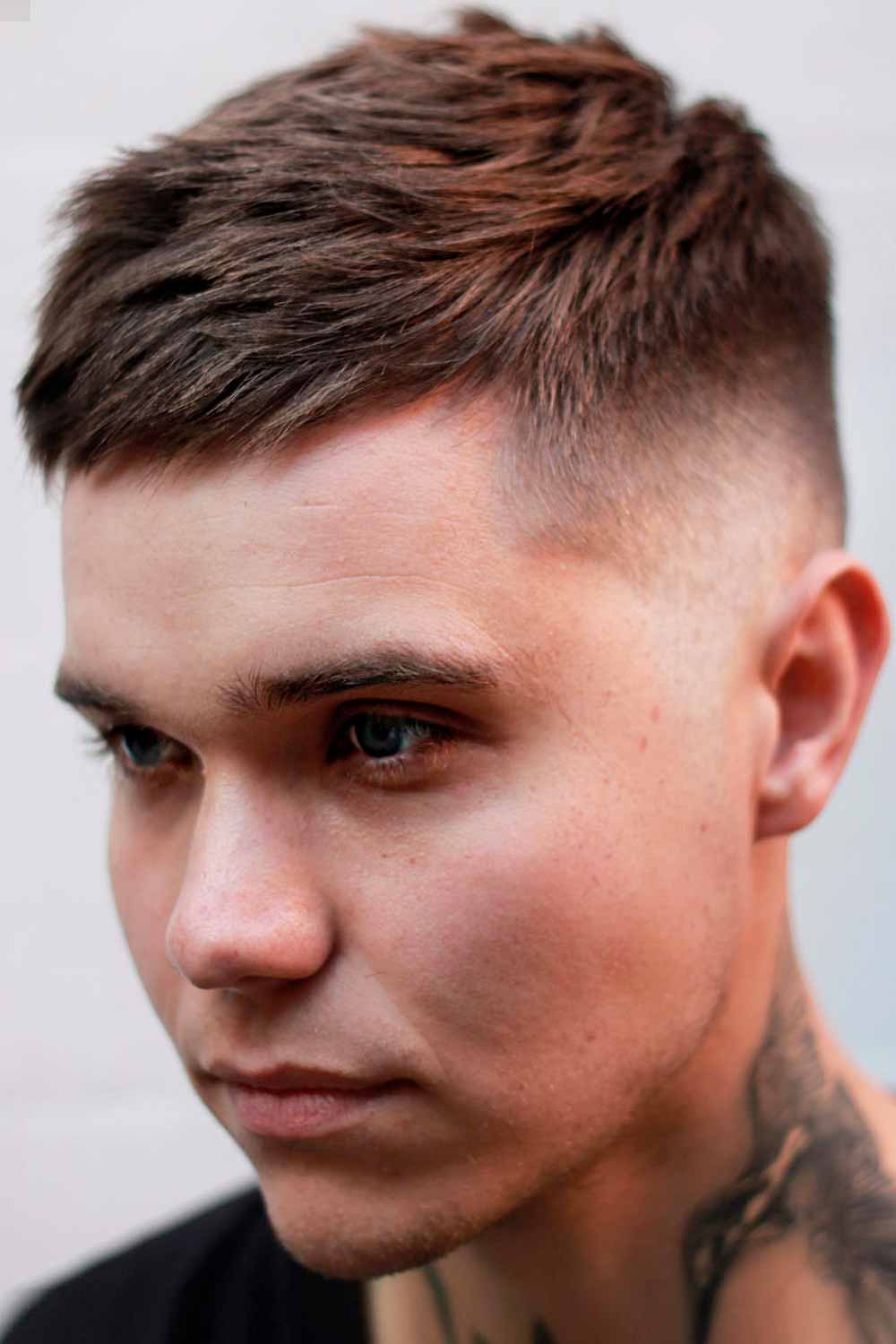 While the crisp side part maintains its classic appeal, the Ivy League aesthetic has evolved, particularly through the subtle incorporation of fades and texturized tops. “An Ivy League haircut” doesn’t necessarily mean a full side part anymore, but it still maintains the underlying structure and refined appearance. A hair stylist might blend the top into a neat, shorter back undercut or taper the sides softly. The key is maintaining that overall clean, sculpted feel. This evolution keeps the style relevant by blending modern haircutting techniques with the inherent polish of the original style.
Crisp and Contour: Framing the Face
 Regardless of the specific cut – be it a low fade side part or a razor undercut frame – the way the hair is shaped around the temples and back of the head is characteristic. The hair is sculpted to cleanly frame the central parting or, in some variations, to create a defined outline. This contouring is crucial. It draws attention to the front, the man’s face, while letting the sides recede slightly, creating height and separation. There’s a subtle message here: draw the eye to the center of the frame, to the face.
Navigating the Business World
 There’s a psychological factor at play here. In a fast-paced, often impersonal business environment, certain uniformities help establish trust and credibility. The Ivy League haircut, with its roots in academic success, suggests intelligence and seriousness. It projects reliability without being overly flashy, fitting neatly within the “safe” wardrobe of professional grooming. It’s adaptable too, suitable for a wide range of face shapes and hair types when executed properly, making it a very practical choice for men who take their professional presentation seriously.
Texture and Weight: The Modern Ivy Adjust
 To keep pace with modern grooming trends, the classic Ivy League haircut has also seen variations with texturized top lengths and controlled volume. A shorter back might use styling product to add some natural texture and light hold, creating a look closer to the “cool class” vibe but still rooted in the original style’s precision. This updated approach maintains the core visual language – defined separation, height at the sides, but allows for slightly more relaxed handling and a bolder silhouette. It demonstrates how a traditional style can absorb contemporary trends yet retain its distinct identity.