
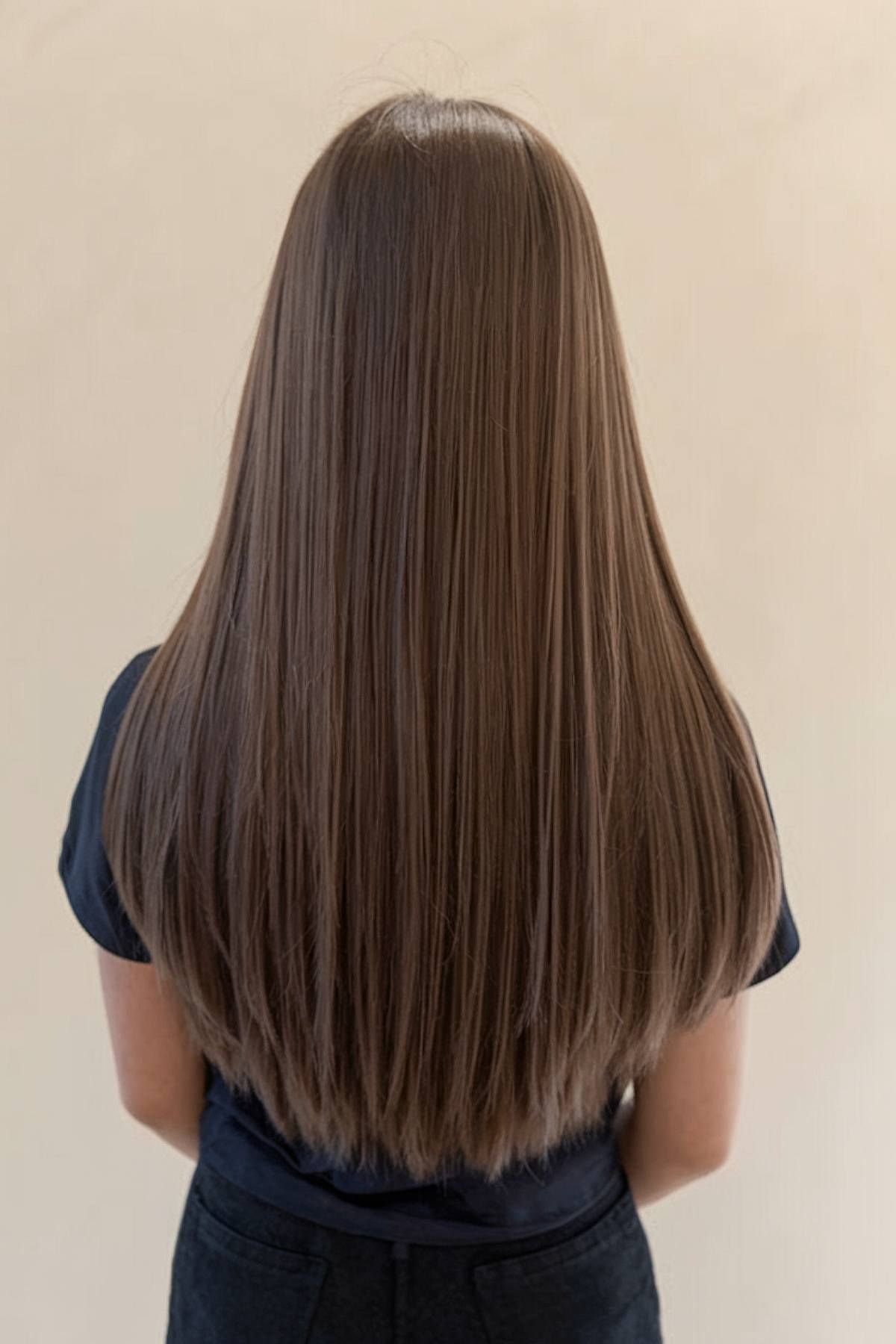
The Haircut Question: U-Cut vs. V-Cut vs. Straight Cut – Which Flatters Your Face?
Navigating the world of modern hairstyles can feel overwhelming, especially when deciding between cuts that drastically alter the look and feel of your hair. U-cuts, V-cuts, and straight cuts represent three distinct approaches to layering and finishing, each offering unique benefits and considerations. Choosing the right one isn’t just about aesthetics; it often involves understanding how these cuts interact with your existing hair texture and, crucially, your facial features. Flattering your face is a key motivator for many seeking a new cut, and understanding the differences can bring you closer to achieving that desired, perfect silhouette. Let’s break down these three popular haircut styles to determine which might work best for you. Understanding the V-Cut: Definition and Versatility
Imagine your hair has perfect, even layers from the back to the front, culminating in a clean, sharp graduation of the hair length towards the hair ends. This is the essence of a V-cut. The defining characteristic is its shape: starting from the hairline down and gradually increasing in length towards the front and sides of the head, forming a distinct ‘V’ shape where the sides are shorter and the front is longer. This style is executed with precision, often using scissors or shearcut techniques, aiming for every piece of hair cut to be slightly longer than the one behind it as it reaches the perimeter of the head. What does the V-cut do? It actively lengthens the hair by visually balancing shorter sides with a longer front piece. This graduated effect tricks the eye, immediately adding inches to what was previously shoulder-length hair. The V-cut provides a dynamic, dimensional look that moves as you walk, adding life and movement to a potentially static layer cut. It’s a style that simultaneously sculpts the hair close to the head while extending the hair’s presence dramatically towards the front. The impact is a significant transformation, making the hair appear longer and more voluminous, while also helping to soften angular features or elongate the face for certain shapes. So, who benefits most from a V-cut? Primarily, face shapes like rectangles and ovals find a fantastic flatterer here, as the lengthened front piece adds width lower on the face, softening its natural symmetry. However, this cut is also surprisingly versatile for those with rounder faces. The carefully graduated lengths guide the eye, subtly defining the jawline and creating a more balanced proportion. It works well for a wide range of hair textures, from thick and coarse, providing movement, to finer textures that need a bit of added body. U-cut Hair Styles: The Elegant Contour
While the V-cut builds length towards the front, the U-cut creates a softer, more sculpted boundary towards the front and around the sides. As implied by its name, this cut forms a broad, high, and relatively even perimeter around most of the hair’s edge, tapering slightly as the hairline is approached. It’s also known as a “cullotage” cut in some regions due to its elegant and defined neckline finish. The goal is to create smooth, clean lines that contour the silhouette rather than sharply increase length along defined sides. The primary effect of a U-cut is to shape, sculpt, and define. It frames the face beautifully, creating a polished and modern edge without the dramatic lengthening of a V-cut. By cutting the perimeter shorter than the hair behind it (compared to the graduated increase in a V-cut), the U-cut provides a strong contrast between the hair above and the skin line beneath. This creates a sharp, modern edge and can visually lift and separate longer hair bodies beneath. This cut style is particularly flattering for face shapes where a clean, defined contour is desirable. For instance, fine hair often looks chic and effortless with a U-cut, as the defined perimeter adds structure to hair that might otherwise lie flat. Conversely, square faces, which look angular when uncut, find wonderful harmony in a U-cut. The curved sides and well-defined perimeter soften the sharp angles, contributing to a smoother overall profile. Essentially, the U-cut provides form-fitting structure, defining your shape while maintaining an air of elegance. Straight Hair Cut Transformations: Minimalist Perfection
The U-cut defines the perimeter. What about a straight cut? The straight cut, often associated with a “hair on a stick” look, is all about even, uniform length throughout the hair (or at least from the scalp down to a standard graduation point). There is no variation in length from side to side or front to back, unlike layer-lifted V-cuts or contour-focused U-cuts. The hair is cut straight down from the head with scissors, or with a shearcut leaving minimal variations if any. The defining action of a straight haircut is elevation. By cutting straight down, it lifts the weight out of the hair, creating volume near the root and, importantly, space as the hair hangs down. For example, a long, straight, sheer-layered (SLC - hair cut very close to the head about 1/2 inch from the head) cut adds significant body and volume, lifting fine hair to a manageable, chic state. A shorter straight cut, like a pixie, provides clean lines and close-to-skin elevation, creating a sculpted appearance. The fundamental characteristic is consistency – uniform length, resulting in predictable hair behavior and a timeless, minimalist aesthetic. Who does a straight cut flatter? Its power lies in its ability to frame without excessive layers. It is generally flattering across a wide range of face shapes, particularly oval and round faces, as it enhances the natural structure without adding dramatic volume lower down. Ovals naturally resist shape disguise, and a clean, straight cut complements their balanced proportions beautifully. For round faces, the strategic layering (even minimal ones) at slightly different heights can add vertical length perception while maintaining the clean appearance, though thicker hair or longer lengths might inadvertently add horizontal width, a consideration usually handled by expert hairstylists based on individual hair density and face shape. Summing Up: Finding Your Perfect Flattering Cut
Choosing between a U-cut, V-cut, and a straight cut isn’t just about picking shapes; it’s about understanding how each approach interacts with your hair, your face, and the desired overall look. U-cuts offer precise, defining contours, ideal for showing hair volume close to the head and offering elegance. V-cuts dramatically lengthen and add movement, perfect for those wanting an instant hair length boost and a dynamic edge, especially suited for rectangular and oval face shapes. Straight cuts provide uniform elevation and clean lines, offering a timeless, structured look that works well across many face shapes when volume is needed. Ultimately, the “best” and most flattering cut depends heavily on your individual face shape, hair texture, density, and the specific length you’re seeking. Regardless of your chosen style, expert consultation is paramount. A skilled stylist will assess your unique features and hair traits, guiding you towards the cut – U, V, or straight – that will not only transform your look but ensures you’re wearing it with flattering, beautiful confidence.