

Imagine your hair as a lush garden, each strand a blade of grass swaying in the wind. Over time, the edges become ragged, the tips split like brittle leaves in autumn. A simple trim is like a gardener’s shears—snipping away the tired, damaged growth to reveal the vibrant life beneath. But why does your hair look noticeably better after a trim? The answer lies not just in aesthetics but in intricate biological science that nurtures your strands from root to tip.
The Transformative Power of a Hair Trim
 Just as a garden flourishes when dead or diseased leaves are removed, your hair thrives when split ends and damaged tips are trimmed away. These damaged strands, often frail and brittle, cause your hair to look lifeless, thin, and unhealthy. Trimming cuts off these deteriorating sections, preventing splits from traveling up the hair shaft—much like pruning a plant to prevent disease spreading. The result is a hair texture that feels smoother, looks fuller, and shines with newfound vitality.
Understanding Hair Science: Growth and Renewal
 Hair growth is a cyclic symphony of renewal, comprised of phases – anagen (growth), catagen (transition), and telogen (rest). Your hair’s health is influenced by how well these phases are managed biologically. A trim might seem superficial, but it synchronizes with these cycles by removing the burdens of damaged ends, allowing new growth to shine brighter without the drag of split ends pulling strands apart. Think of it as clearing the path for fresh shoots in your garden to emerge unhindered.
How Hair Trims Influence Hair Thickness
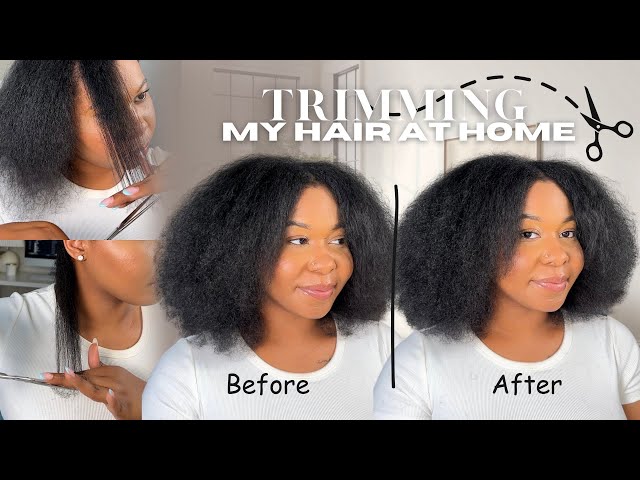 When damaged tips are allowed to persist, hair strands break, leaving the overall texture sparse and frail. A trim helps prevent breakage, creating the illusion of increased thickness. By cutting off the weakest points first, strands look beefier and more robust. This effect is similar to a tree that appears fuller after diseased branches are pruned—healthier branches take center stage, enhancing the entire structure.
Visual Impact: Before and After Hair Trim Magic
 Beyond science, the immediate visual transformation after a trim is undeniable. Hair gains elasticity and bounce, reflecting more light thanks to the even ends that no longer scatter sunlight irregularly. This subtle shift enhances your natural hair’s radiance, making it appear more lively and vibrant. Like a polished gem, each hair strand’s smooth edge contributes to a collective shimmer that can turn heads.
Unlocking the Secrets Behind Hair Growth and Maintenance
 Finally, the key to beautiful hair isn’t just the trim itself but understanding scalp health and follicle function. The hair you trim away marks the history of its journey, while the roots beneath your scalp define its future. Proper scalp care paired with regular trims ensures follicles remain nourished and capable of producing strong, resilient strands. In essence, trimming cleans the slate, nurturing the roots to produce the best possible hair—much like preparing soil for the next season’s bloom.