
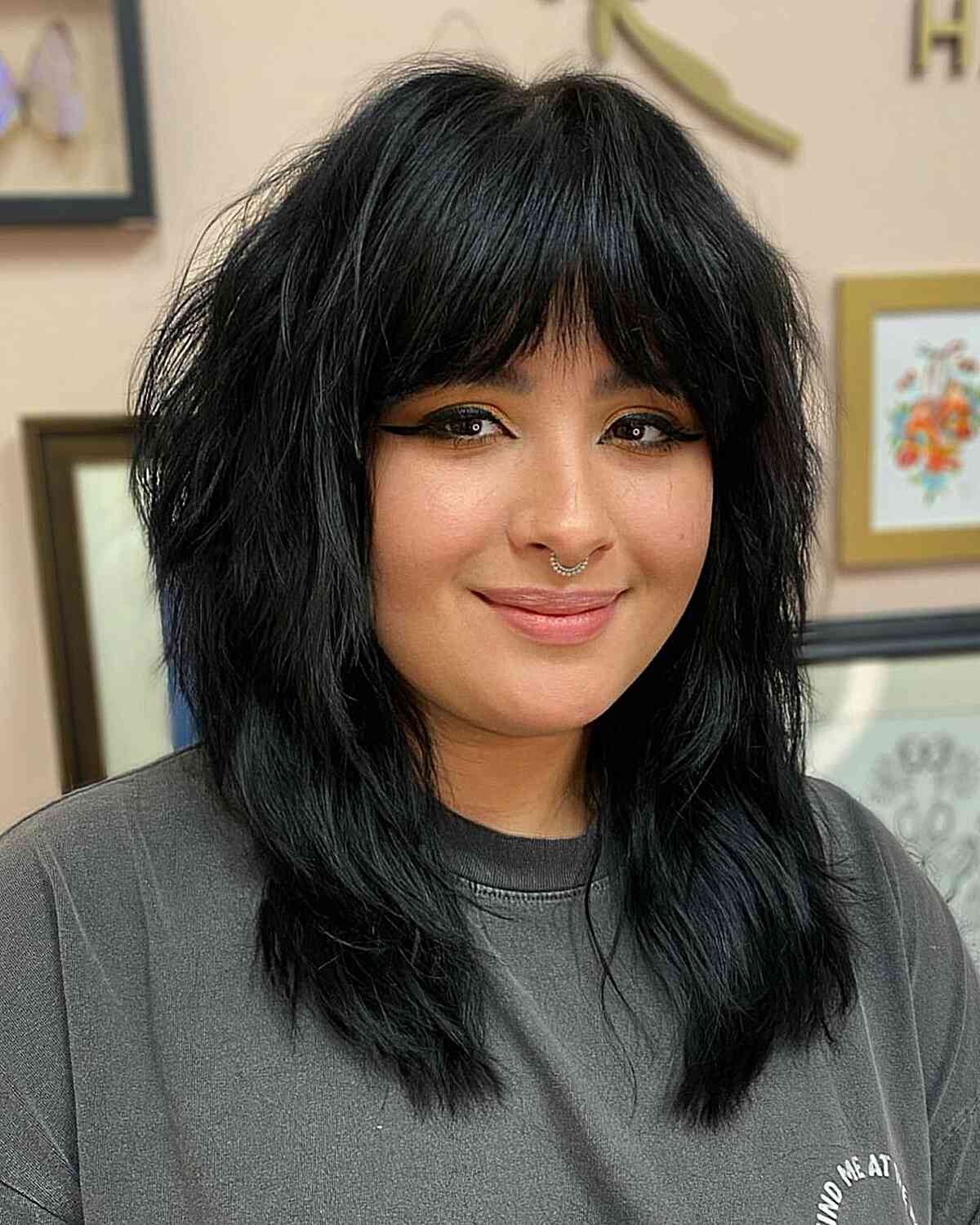
Thinking about bangs for round faces? You might be facing a familiar challenge. Not all bangs play nice with this face shape (often circular or oval). While many styles are incredibly flattering, accidentally choosing the wrong kind can flatten the face, create harsh lines, or just generally leave you looking less than your best. The goal, often, is to soften the roundness, add height to the forehead area, and frame the face elegantly. But understanding what *doesn’t* work can be just as crucial as knowing what does. Let’s explore some of the less-than-ideal bangs that round faces should typically avoid – so you can sidestep these styles and find your perfect, framing front!
The Problem with Oversized, Thick Curtain Bangs
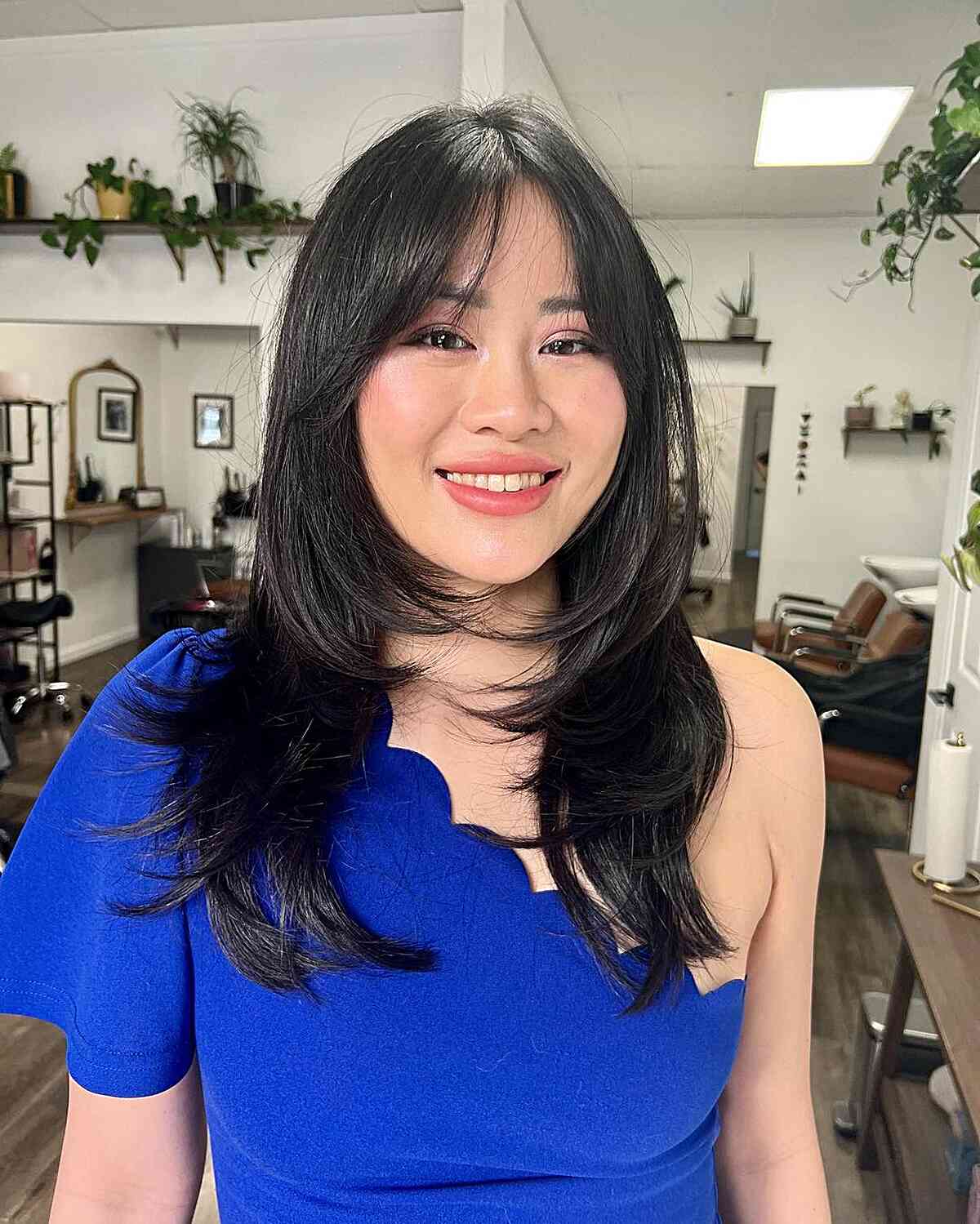 Oversized, thick curtain bangs, while chic in theory, can be a major pitfall for round faces. When the bangs are too dense and extend significantly forward from the part line without being undercut or thinned, they can overwhelm the natural shape. The sheer volume and straight-forward fall can visually decrease the perceived length of the face, making it appear wider or flatter rather than elongating it. This heavy framing doesn’t provide the lift or soft contrast that many round face styles aim for, resulting in an overall less balanced look.
Heavy, One-Width Straight Bangs
 Heavy, one-width straight bangs lack the essential softening effect needed to balance a round face. This style is essentially a horizontal band cutting across the forehead. It doesn’t offer the vertical lift or dynamic movement (layers, texturizing) that helps break up roundness. The straight, blunt line can create the illusion of harsh angles and doesn’t contribute to elongating the face or softening the jowls. The result is a severe, high-fashion vibe that might not soften the face as intended.
Too Short: Mid-Pan-Face Bangs
.jpg)Picking up bangs exactly at the mid-pan area (directly between the eyes) can create a challenging visual. While sometimes used for a specific style, overly short bangs can emphasize the roundness by minimizing the horizontal distance across the forehead. They don’t provide enough length to frame the face effectively or create a focal point further up. This length can draw attention downward rather than helping to balance the proportions. Ensure your bangs are long enough (at least to the eyebrows or slightly past) to create framing.
Dead Straight Across the Face
 Dead-straight bangs, particularly if they are flat-ironed and lack any layering or texturizing, can become a heavy burden on a round face. They don’t move with the head and can cling or look stiff from their lying flat. This lack of dimension and movement can make the bangs look like a continuation of the hairline, failing to act as soft separators. The resulting silhouette is uniform and wide, which can visually minimize the face’s shape rather than gently framing it, leading to a less defined and potentially less polished appearance.
Hiding the Hairline Edge
 Bangs pulled excessively far back or receding, especially when they are long (blunt), can create interestingly awkward lines at the highest points of the face and head. This style risks hiding or blending into the natural hairline edge, creating a potentially undefined or harsh line vertically in that specific area. While not necessarily overly voluminous, the back-knowledgeable style can disrupt the flow, often looking awkward or even contributing to a slightly receding or sharp silhouette at the top front of the head, which isn’t ideal for achieving harmonious framing.